
Advanced Diagnostic Insight for Personalized Hair Restoration
Trichoscopy is a non-invasive diagnostic technique that uses high-magnification imaging to examine the scalp, hair follicles, and hair shafts in precise detail. This advanced hair analysis allows physicians to identify the root causes of hair loss, assess follicle health, and detect early signs of thinning before they become visibly apparent.
At DrHair90210, trichoscopy forms the foundation of every effective hair restoration plan. By understanding what’s happening beneath the surface, we can design accurate, targeted treatments that address your unique hair and scalp condition.
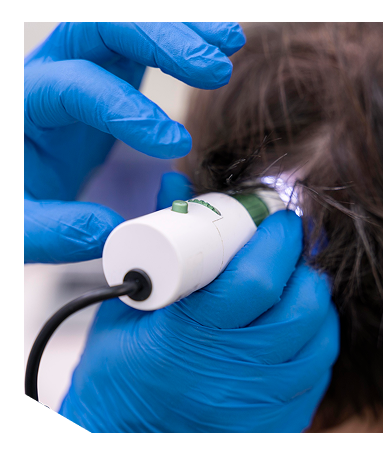
Hair loss is a complex medical condition, and visual inspection alone is rarely sufficient to determine its true cause or progression. At DrHair90210, we go beyond surface-level assessment by performing advanced trichoscopy using medical-grade digital imaging systems. This technology allows for a highly detailed, real-time evaluation of critical scalp and hair parameters, including follicular density, hair shaft diameter variability, scalp inflammation, vascular changes, and early signs of follicular miniaturization that may not be visible to the naked eye. By capturing and analyzing this precise data, we are able to accurately diagnose the specific type and stage of hair loss, monitor disease progression, and objectively measure treatment response over time. This data-driven, evidence-based approach removes guesswork from care planning and ensures that every recommendation is tailored to the patient’s unique biology.
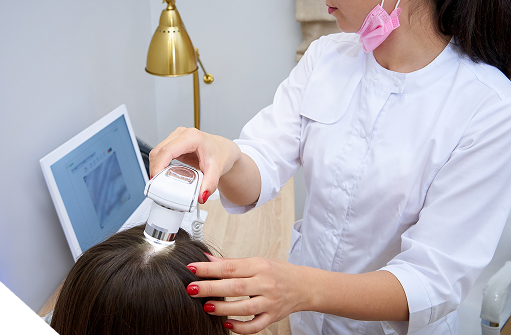
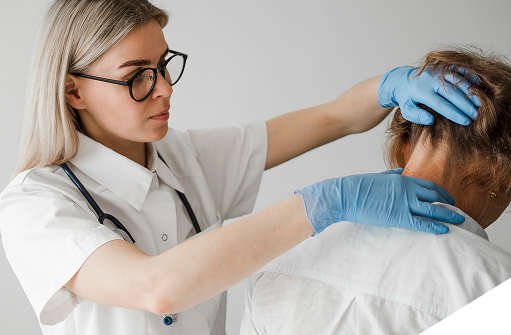
Trichoscopy allows us to distinguish between different hair loss conditions such as androgenetic alopecia, telogen effluvium, alopecia areata, scarring alopecia, and inflammatory scalp disorders.
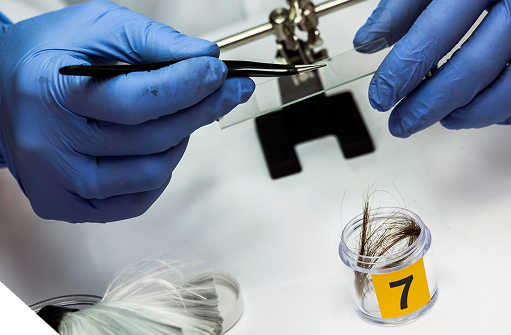
Based on findings, Dr. Shalom designs a tailored treatment strategy that may include medical therapy, regenerative treatments, or surgical solutions when appropriate.
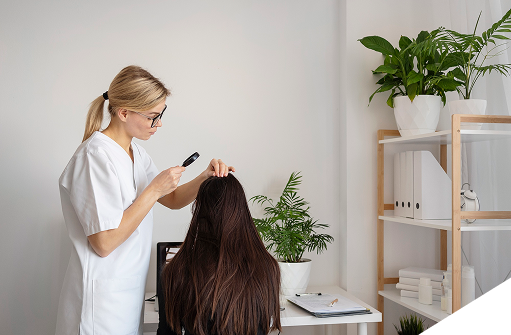
Trichoscopy provides insight that cannot be seen with the naked eye. Early follicle miniaturization, inflammation, and reduced growth cycles can be identified long before significant hair loss occurs. This allows for early intervention, improved treatment success, and long-term hair preservation. By monitoring progress over time, trichoscopy also helps track treatment effectiveness and guide adjustments when needed. Additionally, this objective analysis enhances patient education by clearly visualizing changes, supports more accurate prognosis, and ensures treatment decisions remain proactive, personalized, and evidence-based.
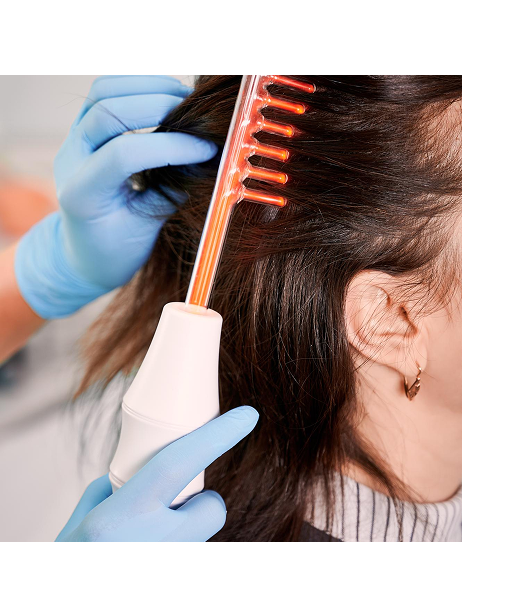
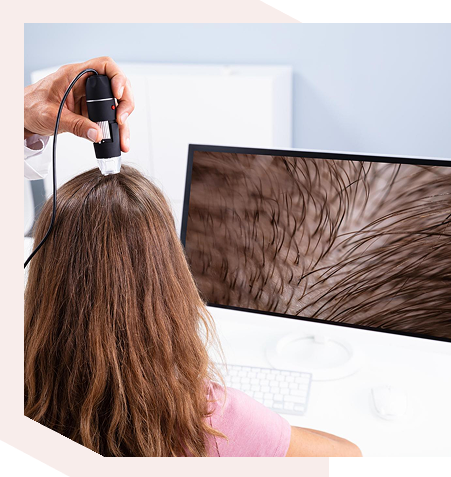
Trichoscopy is a specialized, non-invasive scalp and hair analysis that is ideal for men and women experiencing hair thinning, shedding, or changes in hair density. It is particularly useful for patients who are unsure about the cause of their hair loss and want a precise, professional evaluation before pursuing treatments such as PRP, exosome therapy, or hair transplantation. Trichoscopy is also recommended for individuals with scalp irritation, itching, redness, or inflammation, as it helps identify underlying conditions that may affect hair growth.
Dr. Shalom personally interprets trichoscopic findings and integrates them into a comprehensive hair restoration strategy. His experience across medical, regenerative, and surgical hair treatments ensures that diagnostic insights translate into effective action. Patients value Dr. Shalom’s thorough, honest evaluations and his focus on evidence-based solutions rather than one-size-fits-all recommendations.
Trichoscopy can be adapted to evaluate a wide range of hair textures, ethnic backgrounds, and scalp conditions by adjusting imaging depth and diagnostic focus.
Detects follicle miniaturization and progression
Distinguishes hormonal vs. diffuse shedding
Identifies redness, scaling, and follicle damage
Monitors graft survival and regrowth
This tailored diagnostic approach ensures precise evaluation for every patient.
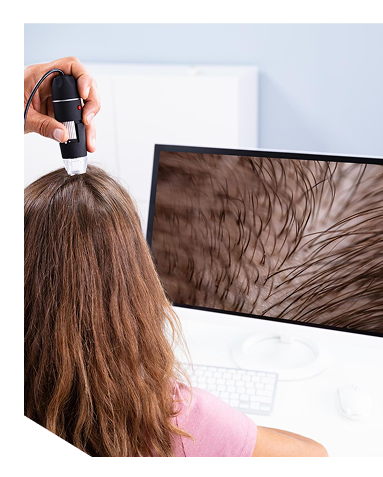
Hair loss evolves over time, and a one-time evaluation is often not enough. Trichoscopy allows DrHair90210 to continuously monitor subtle changes in the scalp and hair follicles, accurately track treatment response, and proactively adjust therapies to protect and preserve remaining follicles before further damage occurs. This long-term, data-driven strategy supports sustained hair health, minimizes unnecessary or ineffective treatments, and ensures interventions remain precisely aligned with each patient’s changing condition—ultimately leading to more consistent, predictable, and lasting results.
Posted on GoogleTrustindex verifies that the original source of the review is Google. Went in for a hair transplant consult w/ Dr. Shalom and had a really good experience. He was super nice, easy to talk to, and made me feel comfortable right away. Ended up doing PRP + exosomes while I was there and the whole process was quick and easy. Great staff too, everyone was friendly and made the experience really comfortable. Definitely recommend.Posted on GoogleTrustindex verifies that the original source of the review is Google. I had such an amazing experience with Dr. Shalom! I came in for a consultation for an eyebrow transplant, and after meeting with him, I’m even more excited and confident about moving forward with the procedure. Dr. Shalom was incredibly thorough and professional. He took detailed photos of my eyebrows and scalp, carefully evaluated everything, and even did my labs right there in the office. I really appreciated how much time and attention he put into my consultation and how thoroughly he explained everything. You can truly tell he cares about his patients and takes his work seriously. I’m officially scheduled for my procedure next month, and I honestly can’t wait! I’m so excited to see the results and would absolutely recommend Dr. Shalom to anyone considering an eyebrow transplant.Posted on GoogleTrustindex verifies that the original source of the review is Google. Dr Jonathan Shalom is an amazing Doctor! Not only is he on the cutting edge of hair restoration, but he truly cares about his patients. He is compassionate and committed 💯 to your hair restoration goals. He takes the time to explain every procedure from the beginning to the end. His office bright and beautiful and his staff (Lorena) is very kind. I cannot recommend him enough! Thank you Dr Shalom!Posted on GoogleTrustindex verifies that the original source of the review is Google. Great work and love the result. Thank you so much. Definitely recommended.Posted on GoogleTrustindex verifies that the original source of the review is Google. ★★★★★ I rarely write reviews, but I truly felt that Dr. Jonathan Shalom deserves one. From my very first consultation, I knew I was in the hands of someone who genuinely cares about his patients. He took the time to answer all of my questions, explained everything clearly, and made me feel comfortable and confident throughout the process. In my opinion, Dr. Jonathan Shalom is one of the best hair restoration physicians in Beverly Hills. His professionalism, expertise, attention to detail, and genuine care for patients are truly exceptional. His entire team is friendly, welcoming, and highly professional, making every visit a great experience. If you are considering a hair restoration procedure, I wholeheartedly recommend Dr. Jonathan Shalom. Don't waste your time looking anywhere else. You'll be in some of the best hands you could ask for. Thank you, Dr. Jonathan Shalom, and the entire Doctor Hair team.Posted on GoogleTrustindex verifies that the original source of the review is Google. I was losing hair and never figured it out. My stylist told me about Dr Shaloms office. I made an appointment and he was so thorough! He drew my labs that day. I'm 4 months in and my hair is thicker than ever with minimal loss. Grateful 🙏🏻Posted on GoogleTrustindex verifies that the original source of the review is Google. I live in North San Diego County and drive over two hours each way to see Dr. Shalom and I will continue to do so without hesitation. There are plenty of well regarded hair loss doctors near me who offer PRP but after my initial online consultation with Dr. Shalom, I knew I'd found the best. Hair loss is scary. It's personal, and it can feel deeply unsettling especially when you're not sure what's causing it. Dr. Shalom has made me feel heard, validated, and genuinely cared for. He is kind in a way that's rare in medicine, and he never makes me feel rushed or dismissed. His intake process was thorough in ways I didn't expect. He reviewed extensive lab work to understand whether my hair loss was connected to broader health issues and he performed an in-office hair test to assess for androgenic alopecia. He explains everything clearly, follows up consistently, and has honestly been more attentive to my overall health than my own GP. I just completed my first PRP session with more to come and I'll be documenting my progress along the way. I'm already confident in this process because I'm confident in him and I'll be back to update this review as my results unfold. His team reflects the same standard of care. Lorena and Shauna have been exceptional. They are quickly responsive, warm, and helpful. Lorena in particular has held my hand through the process, and that support has meant more than I can express. Dr. Shalom is the kind of physician you wish you could see for everything. If you're scared, overwhelmed, or just not sure where to turn he is the right choice.Posted on GoogleTrustindex verifies that the original source of the review is Google. Dr. Shalom and the team at Dr Hair 90210 were fantastic. Professional, knowledgeable, and genuinely caring throughout the entire process. They took the time to answer all my questions and made me feel comfortable every step of the way. Highly recommend!Posted on GoogleTrustindex verifies that the original source of the review is Google. If you are dealing with hair loss, stop scrolling and book with Dr. Shalom. Full stop. When my hair started falling out, I was scared and desperate. And so many doctors try to push unnecessary products and packages. Dr. Shalom was the complete opposite. He did the due diligence first, checked my bloodwork, actually listened and didn't try to sell me a single thing I didn't need. He recommended one session of his double spin PRP with high-quality exosomes. That's it. And just like that, the shedding stopped. With it, so did my fear. My confidence came back and my hair is now growing longer and stronger than ever. Dr. Shalom is the best of the best. He is a doctor who treats his patients like family and lets the results speak for themselves. I am beyond grateful.Posted on GoogleTrustindex verifies that the original source of the review is Google. I came here from the LA times article. Dr. Shalom did a very thorough exam on my scalp as I was noticing abnormal shedding to the sides of my hair. He started me on a treatment plan, and WOW. so impressed and so grateful!
If you’re seeking accurate diagnosis and personalized hair restoration planning in California, DrHair90210 offers advanced trichoscopy and expert evaluation to guide your journey with confidence.
Contact us today to schedule your consultation and start your journey to confidence with a Trichoscopy & Hair Analysis in California.
Trichoscopy uses high-magnification digital imaging to examine the scalp and hair follicles in detail. Unlike a standard visual exam, it reveals follicle miniaturization, hair shaft variation, inflammation, and early thinning that cannot be seen with the naked eye. This allows for accurate diagnosis and targeted treatment planning. It is painless, non-invasive, and performed during your consultation.
Yes. Trichoscopy helps differentiate between common and complex hair loss conditions such as androgenetic alopecia, telogen effluvium, alopecia areata, and scarring alopecias. While additional tests may sometimes be required, trichoscopy provides critical diagnostic clues that guide next steps. This reduces misdiagnosis and unnecessary treatments.
No. Trichoscopy is completely painless and does not involve needles, incisions, or scalp irritation. A handheld imaging device is gently placed on the scalp to capture magnified images. Patients typically find the process quick and comfortable.
Absolutely. Trichoscopy evaluates donor hair density, follicle quality, and scalp condition, helping determine transplant candidacy. It also identifies whether non-surgical treatments may be effective before surgery is considered. This ensures ethical and appropriate recommendations.
The imaging portion typically takes 15–30 minutes, depending on the number of scalp areas evaluated. When combined with consultation and treatment planning, the visit may last up to an hour. The time investment provides invaluable insight into your hair health.
Yes. Trichoscopy is an excellent tool for monitoring response to PRP, exosomes, medications, microneedling, or post-transplant healing. Serial images allow objective comparison over time, helping refine treatment plans for optimal results.
Yes. Trichoscopy can be adapted for straight, curly, coarse, fine, and textured hair across all ethnicities. Imaging techniques are adjusted to ensure accurate evaluation regardless of hair type or scalp tone.
Minimal preparation is required. Patients are typically advised to arrive with a clean scalp free of styling products. This ensures the clearest imaging and most accurate assessment.
Costs vary depending on the depth of evaluation and whether it is combined with consultation or treatment planning. A detailed quote is provided during your appointment with Dr. Shalom.
While a single session provides valuable insight, trichoscopy is often used periodically to monitor changes and guide long-term hair preservation strategies. Follow-up imaging helps maintain optimal hair health over time.
Post-transplant care includes gentle washing, avoiding sun exposure, and following your surgeon’s instructions. Regular follow-ups help monitor growth and maintain long-term results.