
Expert Care for Curly & Coiled Hair—Designed with Precision and Respect
African American hair has unique structural characteristics that require specialized care, advanced tools, and an artistic approach. Its natural curl pattern, follicle curvature, and scalp composition demand techniques tailored to ensure safe extraction, natural regrowth, and long-term success. Standard hair restoration methods for straight hair may damage follicles, compromise curl integrity, and reduce graft survival if applied improperly. At DrHair90210, we provide expert hair restoration solutions for Black men and women, using techniques specifically adapted for curly and coiled hair.
Our methods preserve natural curl patterns while restoring density and ensuring results that look authentic and healthy.Each procedure is designed to enhance the hairline, temple, crown, or overall density while respecting natural texture.
By combining advanced diagnostics, surgical precision, and regenerative therapies, DrHair90210 ensures that each patient achieves results that not only restore hair but also boost confidence and self-expression.
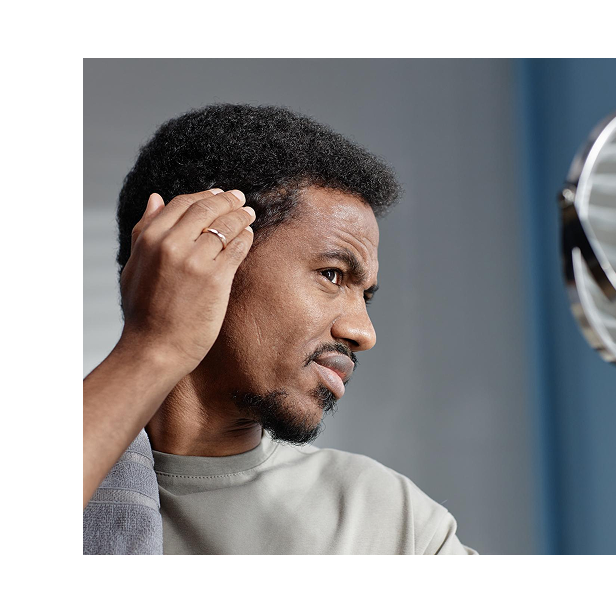
Afro-textured hair presents unique anatomical and surgical considerations due to the curved, spiral, or tightly coiled growth pattern of the follicle beneath the scalp. Unlike straight hair, these follicles often follow a non-linear path within the dermis, making them more susceptible to transection or trauma during extraction if standard techniques are used. Improper handling can significantly compromise graft integrity, reduce survival rates, and negatively affect the final aesthetic outcome.
Our specialized approach is designed specifically to address these challenges. We utilize high-definition trichoscopy to accurately visualize follicular direction, depth, and curvature prior to extraction. This detailed assessment allows for precise planning and informed decision-making throughout the procedure. Custom punch selection—tailored in size, depth, and design—combined with advanced Follicular Unit Extraction (FUE) techniques ensures each graft is harvested with minimal trauma while preserving the natural curl pattern of the follicle.
PRP, exosomes, and medical hair therapy programs support scalp health, stimulate follicle activity, slow hair loss progression, and improve overall density. These approaches are especially beneficial for early-stage hair loss or inflammatory conditions.
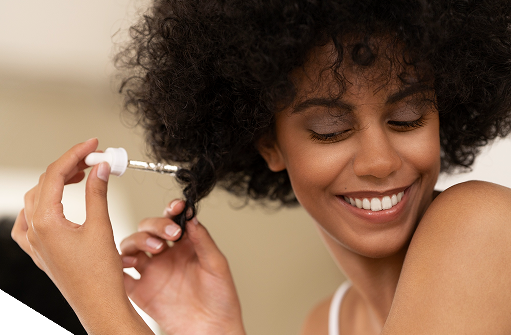
Many patients benefit from a combination of surgical and non-surgical therapies to maximize coverage, maintain curl integrity, and promote long-term scalp health.
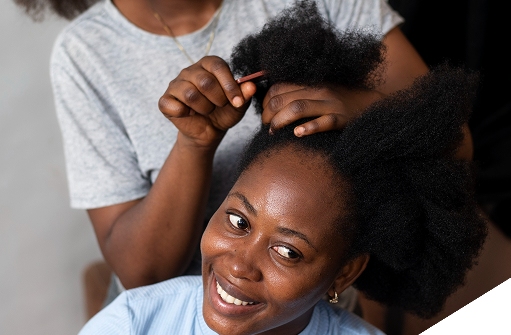
Natural-looking results in Afro-textured hair restoration depend on a deep understanding of curl patterns, hairline architecture, and strategic density distribution. Every design decision is guided by the need to respect the natural behavior of curly and coiled hair, ensuring outcomes that are both aesthetically pleasing and biologically sound. Hairlines are carefully constructed with soft, irregular transitions rather than rigid or straight edges, mimicking the organic variation found in natural growth. This approach prevents an artificial appearance and allows the hairline to age naturally over time.
Each graft is meticulously oriented to follow the natural curl direction and exit angle of the hair shaft. Proper alignment is essential not only for visual realism but also for ease of styling and long-term graft survival. Special attention is devoted to high-impact aesthetic zones such as the temples, frontal hairline, and crown, where even minor inconsistencies in angle or density can be easily noticeable. By carefully controlling placement, spacing, and layering, transplanted hair blends seamlessly with existing hair in all directions.
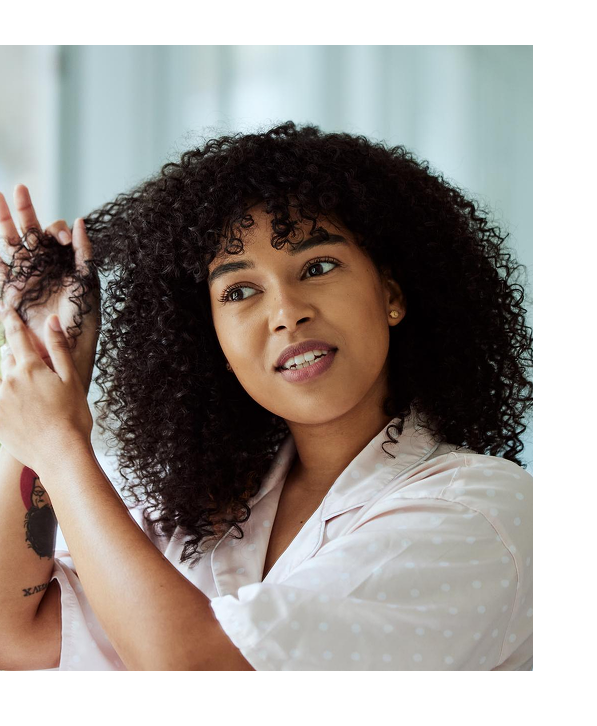
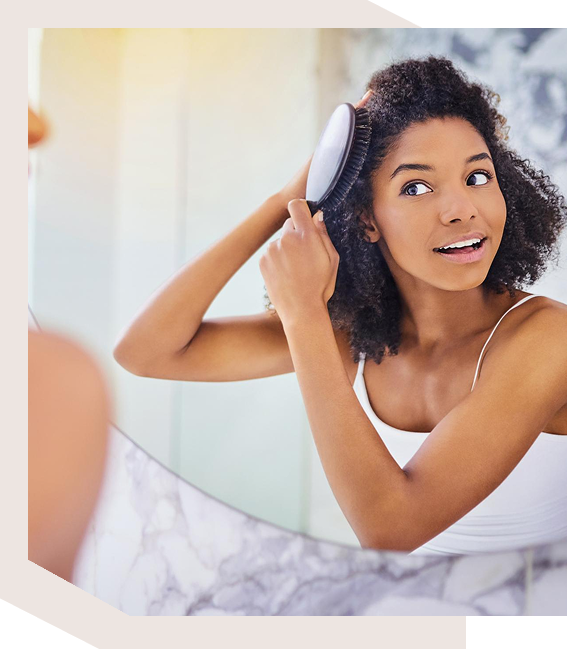
Ideal candidates include men and women experiencing thinning, hairline recession, or localized hair loss who have stable donor hair and a healthy scalp. Candidates may seek restoration due to genetics, traction alopecia, CCCA, or other lifestyle-related hair loss. Early evaluation and proper diagnosis increase success and long-term natural outcomes.
Dr. Shalom has specialized expertise in curly and coiled hair restoration, combining surgical precision with an understanding of cultural hair practices. This ensures results honor natural texture, density, and styling needs. Patients benefit from hands-on physician involvement in every procedure, ethical treatment planning, and advanced techniques specifically for Afro-textured hair. Donor preservation, long-term scalp health, and natural curl maintenance are central to every plan.
Hair loss in African American patients can differ significantly from other populations due to unique hair structure, follicle curvature, and cultural styling practices. Understanding the type of hair loss and the underlying condition is essential for designing a personalized restoration plan that preserves curl integrity and delivers natural, lasting results.

A hereditary condition affecting both men and women.

Most common among women who frequently wear protective styles.
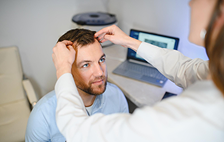
A scarring alopecia that typically begins at the crown and spreads outward.
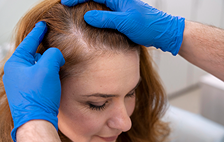
Includes a variety of inflammatory conditions that destroy hair follicles
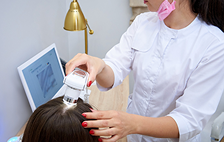
Can be genetic or influenced by styling practices and aging.
Hair loss in African American patients can differ significantly from other populations due to unique hair structure, follicle curvature, and cultural styling practices. Understanding the type of hair loss and the underlying condition is essential for designing a personalized restoration plan that preserves curl integrity and delivers natural, lasting results.
A hereditary condition affecting both men and women.
Most common among women who frequently wear protective styles.
A scarring alopecia that typically begins at the crown and spreads outward.
Includes a variety of inflammatory conditions that destroy hair follicles
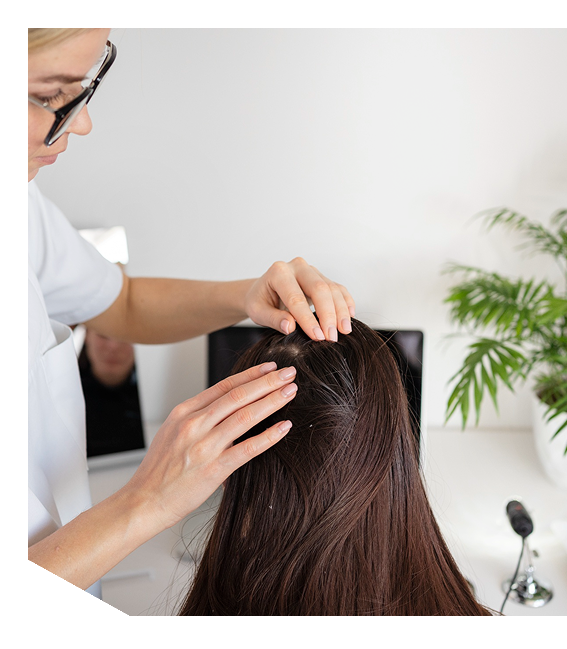
Successful hair restoration for African American patients requires a comprehensive approach that goes beyond the surgical procedure itself. Central to this process is careful donor area management—ensuring that follicles are harvested responsibly to avoid overharvesting, minimize scarring, and preserve the long-term health and density of the donor scalp. Attention is also given to pre-existing scalp conditions, such as folliculitis, seborrheic dermatitis, or scalp inflammation, which can affect graft survival if left untreated. By addressing these factors before, during, and after surgery, we create an optimal environment for sustainable, healthy hair growth.
Long-term care is an integral component of our approach. Medical therapies, including topical treatments, oral medications, or biologic adjuncts, may be incorporated to maintain existing hair, slow the progression of hair loss, and enhance scalp and follicle health. These therapies complement the surgical restoration by supporting graft survival and optimizing overall hair density. Regular follow-up visits allow us to monitor progress, address any emerging issues promptly, and make adjustments to the treatment plan to ensure continued success.
Posted on GoogleTrustindex verifies that the original source of the review is Google. Went in for a hair transplant consult w/ Dr. Shalom and had a really good experience. He was super nice, easy to talk to, and made me feel comfortable right away. Ended up doing PRP + exosomes while I was there and the whole process was quick and easy. Great staff too, everyone was friendly and made the experience really comfortable. Definitely recommend.Posted on GoogleTrustindex verifies that the original source of the review is Google. I had such an amazing experience with Dr. Shalom! I came in for a consultation for an eyebrow transplant, and after meeting with him, I’m even more excited and confident about moving forward with the procedure. Dr. Shalom was incredibly thorough and professional. He took detailed photos of my eyebrows and scalp, carefully evaluated everything, and even did my labs right there in the office. I really appreciated how much time and attention he put into my consultation and how thoroughly he explained everything. You can truly tell he cares about his patients and takes his work seriously. I’m officially scheduled for my procedure next month, and I honestly can’t wait! I’m so excited to see the results and would absolutely recommend Dr. Shalom to anyone considering an eyebrow transplant.Posted on GoogleTrustindex verifies that the original source of the review is Google. Dr Jonathan Shalom is an amazing Doctor! Not only is he on the cutting edge of hair restoration, but he truly cares about his patients. He is compassionate and committed 💯 to your hair restoration goals. He takes the time to explain every procedure from the beginning to the end. His office bright and beautiful and his staff (Lorena) is very kind. I cannot recommend him enough! Thank you Dr Shalom!Posted on GoogleTrustindex verifies that the original source of the review is Google. Great work and love the result. Thank you so much. Definitely recommended.Posted on GoogleTrustindex verifies that the original source of the review is Google. ★★★★★ I rarely write reviews, but I truly felt that Dr. Jonathan Shalom deserves one. From my very first consultation, I knew I was in the hands of someone who genuinely cares about his patients. He took the time to answer all of my questions, explained everything clearly, and made me feel comfortable and confident throughout the process. In my opinion, Dr. Jonathan Shalom is one of the best hair restoration physicians in Beverly Hills. His professionalism, expertise, attention to detail, and genuine care for patients are truly exceptional. His entire team is friendly, welcoming, and highly professional, making every visit a great experience. If you are considering a hair restoration procedure, I wholeheartedly recommend Dr. Jonathan Shalom. Don't waste your time looking anywhere else. You'll be in some of the best hands you could ask for. Thank you, Dr. Jonathan Shalom, and the entire Doctor Hair team.Posted on GoogleTrustindex verifies that the original source of the review is Google. I was losing hair and never figured it out. My stylist told me about Dr Shaloms office. I made an appointment and he was so thorough! He drew my labs that day. I'm 4 months in and my hair is thicker than ever with minimal loss. Grateful 🙏🏻Posted on GoogleTrustindex verifies that the original source of the review is Google. I live in North San Diego County and drive over two hours each way to see Dr. Shalom and I will continue to do so without hesitation. There are plenty of well regarded hair loss doctors near me who offer PRP but after my initial online consultation with Dr. Shalom, I knew I'd found the best. Hair loss is scary. It's personal, and it can feel deeply unsettling especially when you're not sure what's causing it. Dr. Shalom has made me feel heard, validated, and genuinely cared for. He is kind in a way that's rare in medicine, and he never makes me feel rushed or dismissed. His intake process was thorough in ways I didn't expect. He reviewed extensive lab work to understand whether my hair loss was connected to broader health issues and he performed an in-office hair test to assess for androgenic alopecia. He explains everything clearly, follows up consistently, and has honestly been more attentive to my overall health than my own GP. I just completed my first PRP session with more to come and I'll be documenting my progress along the way. I'm already confident in this process because I'm confident in him and I'll be back to update this review as my results unfold. His team reflects the same standard of care. Lorena and Shauna have been exceptional. They are quickly responsive, warm, and helpful. Lorena in particular has held my hand through the process, and that support has meant more than I can express. Dr. Shalom is the kind of physician you wish you could see for everything. If you're scared, overwhelmed, or just not sure where to turn he is the right choice.Posted on GoogleTrustindex verifies that the original source of the review is Google. Dr. Shalom and the team at Dr Hair 90210 were fantastic. Professional, knowledgeable, and genuinely caring throughout the entire process. They took the time to answer all my questions and made me feel comfortable every step of the way. Highly recommend!Posted on GoogleTrustindex verifies that the original source of the review is Google. If you are dealing with hair loss, stop scrolling and book with Dr. Shalom. Full stop. When my hair started falling out, I was scared and desperate. And so many doctors try to push unnecessary products and packages. Dr. Shalom was the complete opposite. He did the due diligence first, checked my bloodwork, actually listened and didn't try to sell me a single thing I didn't need. He recommended one session of his double spin PRP with high-quality exosomes. That's it. And just like that, the shedding stopped. With it, so did my fear. My confidence came back and my hair is now growing longer and stronger than ever. Dr. Shalom is the best of the best. He is a doctor who treats his patients like family and lets the results speak for themselves. I am beyond grateful.Posted on GoogleTrustindex verifies that the original source of the review is Google. I came here from the LA times article. Dr. Shalom did a very thorough exam on my scalp as I was noticing abnormal shedding to the sides of my hair. He started me on a treatment plan, and WOW. so impressed and so grateful!
Hear from patients across California about their African American Hair Restoration experience.
Posted on GoogleTrustindex verifies that the original source of the review is Google. Went in for a hair transplant consult w/ Dr. Shalom and had a really good experience. He was super nice, easy to talk to, and made me feel comfortable right away. Ended up doing PRP + exosomes while I was there and the whole process was quick and easy. Great staff too, everyone was friendly and made the experience really comfortable. Definitely recommend.Posted on GoogleTrustindex verifies that the original source of the review is Google. I had such an amazing experience with Dr. Shalom! I came in for a consultation for an eyebrow transplant, and after meeting with him, I’m even more excited and confident about moving forward with the procedure. Dr. Shalom was incredibly thorough and professional. He took detailed photos of my eyebrows and scalp, carefully evaluated everything, and even did my labs right there in the office. I really appreciated how much time and attention he put into my consultation and how thoroughly he explained everything. You can truly tell he cares about his patients and takes his work seriously. I’m officially scheduled for my procedure next month, and I honestly can’t wait! I’m so excited to see the results and would absolutely recommend Dr. Shalom to anyone considering an eyebrow transplant.Posted on GoogleTrustindex verifies that the original source of the review is Google. Dr Jonathan Shalom is an amazing Doctor! Not only is he on the cutting edge of hair restoration, but he truly cares about his patients. He is compassionate and committed 💯 to your hair restoration goals. He takes the time to explain every procedure from the beginning to the end. His office bright and beautiful and his staff (Lorena) is very kind. I cannot recommend him enough! Thank you Dr Shalom!Posted on GoogleTrustindex verifies that the original source of the review is Google. Great work and love the result. Thank you so much. Definitely recommended.Posted on GoogleTrustindex verifies that the original source of the review is Google. ★★★★★ I rarely write reviews, but I truly felt that Dr. Jonathan Shalom deserves one. From my very first consultation, I knew I was in the hands of someone who genuinely cares about his patients. He took the time to answer all of my questions, explained everything clearly, and made me feel comfortable and confident throughout the process. In my opinion, Dr. Jonathan Shalom is one of the best hair restoration physicians in Beverly Hills. His professionalism, expertise, attention to detail, and genuine care for patients are truly exceptional. His entire team is friendly, welcoming, and highly professional, making every visit a great experience. If you are considering a hair restoration procedure, I wholeheartedly recommend Dr. Jonathan Shalom. Don't waste your time looking anywhere else. You'll be in some of the best hands you could ask for. Thank you, Dr. Jonathan Shalom, and the entire Doctor Hair team.Posted on GoogleTrustindex verifies that the original source of the review is Google. I was losing hair and never figured it out. My stylist told me about Dr Shaloms office. I made an appointment and he was so thorough! He drew my labs that day. I'm 4 months in and my hair is thicker than ever with minimal loss. Grateful 🙏🏻Posted on GoogleTrustindex verifies that the original source of the review is Google. I live in North San Diego County and drive over two hours each way to see Dr. Shalom and I will continue to do so without hesitation. There are plenty of well regarded hair loss doctors near me who offer PRP but after my initial online consultation with Dr. Shalom, I knew I'd found the best. Hair loss is scary. It's personal, and it can feel deeply unsettling especially when you're not sure what's causing it. Dr. Shalom has made me feel heard, validated, and genuinely cared for. He is kind in a way that's rare in medicine, and he never makes me feel rushed or dismissed. His intake process was thorough in ways I didn't expect. He reviewed extensive lab work to understand whether my hair loss was connected to broader health issues and he performed an in-office hair test to assess for androgenic alopecia. He explains everything clearly, follows up consistently, and has honestly been more attentive to my overall health than my own GP. I just completed my first PRP session with more to come and I'll be documenting my progress along the way. I'm already confident in this process because I'm confident in him and I'll be back to update this review as my results unfold. His team reflects the same standard of care. Lorena and Shauna have been exceptional. They are quickly responsive, warm, and helpful. Lorena in particular has held my hand through the process, and that support has meant more than I can express. Dr. Shalom is the kind of physician you wish you could see for everything. If you're scared, overwhelmed, or just not sure where to turn he is the right choice.Posted on GoogleTrustindex verifies that the original source of the review is Google. Dr. Shalom and the team at Dr Hair 90210 were fantastic. Professional, knowledgeable, and genuinely caring throughout the entire process. They took the time to answer all my questions and made me feel comfortable every step of the way. Highly recommend!Posted on GoogleTrustindex verifies that the original source of the review is Google. If you are dealing with hair loss, stop scrolling and book with Dr. Shalom. Full stop. When my hair started falling out, I was scared and desperate. And so many doctors try to push unnecessary products and packages. Dr. Shalom was the complete opposite. He did the due diligence first, checked my bloodwork, actually listened and didn't try to sell me a single thing I didn't need. He recommended one session of his double spin PRP with high-quality exosomes. That's it. And just like that, the shedding stopped. With it, so did my fear. My confidence came back and my hair is now growing longer and stronger than ever. Dr. Shalom is the best of the best. He is a doctor who treats his patients like family and lets the results speak for themselves. I am beyond grateful.Posted on GoogleTrustindex verifies that the original source of the review is Google. I came here from the LA times article. Dr. Shalom did a very thorough exam on my scalp as I was noticing abnormal shedding to the sides of my hair. He started me on a treatment plan, and WOW. so impressed and so grateful!
DrHair90210 offers expert hair restoration for Black men and women across California. Personalized care, advanced techniques, and culturally sensitive planning ensure results that preserve curl, restore density, and enhance confidence.
Contact us today to schedule your consultation and start your journey to confidence with a African American Hair Restoration in California.
Yes. FUE is safe when performed by a surgeon experienced with curly and coiled hair. Afro-textured follicles are naturally curved, making them more prone to transection if standard techniques are used. At DrHair90210, we use specialized punches, customized angles, and precise depth control to extract each follicle safely, ensuring high survival rates and minimal trauma to the donor area.
Absolutely. Preserving the natural curl is a critical part of our approach. Transplanted follicles retain their original shape, diameter, and growth characteristics permanently. This ensures that the restored hair blends seamlessly with existing curls, maintains its natural texture, and allows for versatile styling, whether the hair is worn loose, braided, or in protective styles.
Yes, but only if the condition is stable and not actively progressing. Early intervention is key to preventing further follicle loss. Once traction alopecia has stabilized and the scalp is healthy, hair transplantation can restore lost density and rebuild the hairline. Combining surgical restoration with preventive measures and lifestyle modifications helps maintain long-term results.
New hair growth typically begins around 3–4 months post-procedure. Full results are gradually visible over 9–12 months as transplanted follicles mature and strengthen. Hair density, texture, and curl pattern continue to improve over this period, and proper care ensures long-lasting, natural-looking outcomes.
Scarring is minimal with proper technique. FUE leaves tiny, almost invisible dot scars that are easily concealed within natural curls. FUT creates a linear scar, but it is strategically placed within the donor area and hidden by surrounding hair. With careful planning and expert execution, most patients experience no noticeable scarring in daily life.
Yes. PRP (Platelet-Rich Plasma) and exosome therapy can be used alongside surgical procedures to enhance graft survival, stimulate dormant follicles, and promote scalp health. These therapies are particularly effective for early-stage thinning, inflammatory conditions, or patients with weakened follicles due to stress or prior damage. They accelerate healing and improve overall hair quality.
Donor hair is carefully evaluated for curl pattern, thickness, and texture to ensure it matches the recipient area. Hair may be harvested from the scalp, nape, or in some cases, body hair to achieve optimal coverage and natural integration. This meticulous selection is crucial for preserving curl integrity, maintaining density, and producing aesthetically seamless results.
Risks are minimal when procedures are performed by an experienced surgeon. Temporary redness, swelling, mild tenderness, or minor scabbing may occur but usually resolves within a few days. Serious complications are rare, and following post-operative care instructions—including gentle scalp care and avoiding stress on the grafts—helps ensure safety and optimal long-term outcomes.
Yes. Every hairline, temple, and crown area is designed according to individual facial features, natural curl direction, and density goals. Placement is strategic to ensure natural flow and prevent uniform or artificial patterns. This personalized approach allows patients to achieve results that look natural in every hairstyle, including short fades, braids, or loose curls.
Long-term maintenance includes proper scalp care, gentle grooming, and adherence to any recommended medical therapies to support hair growth. Regular follow-ups allow monitoring of donor and recipient areas, early identification of thinning, and timely intervention if necessary. Healthy hair practices and protective styling ensure that the restored hair remains strong, dense, and natural-looking for years.
Premium Comfort Upgrade
IV sedation is available as an add-on upgrade for this procedure — administered by a board certified anesthesiologist with continuous monitoring. Most patients have little to no memory of the session. Wake up with the hard part already done.